
Director of Disaster Management Mr. Jasen Penn is urging residents to complete seasonal preparedness activities as the Atlantic Basin shows signs of entering a more active phase.
“Currently, no systems pose an imminent threat but the regional pattern is shifting,” Mr. Penn said, adding, “Rather than waiting for a storm to enter our forecast area, we should prepare for that possibility now.”
Mr. Penn added that for those who are especially vulnerable in emergencies, advance preparation and planning can be life-saving.
“Persons who use a mobility device; have a vision or a hearing impairment; or who have a chronic health conditions should work with their care providers, family, and neighbours to make sure they will have what they need in the event of an emergency impact,” Mr. Penn said.
Key seasonal preparations include assembling emergency supplies of food, water and medication; reviewing and updating emergency plans and insurance policies; clearing bulky waste; ensuring important documents are in order; and inspecting shutters.
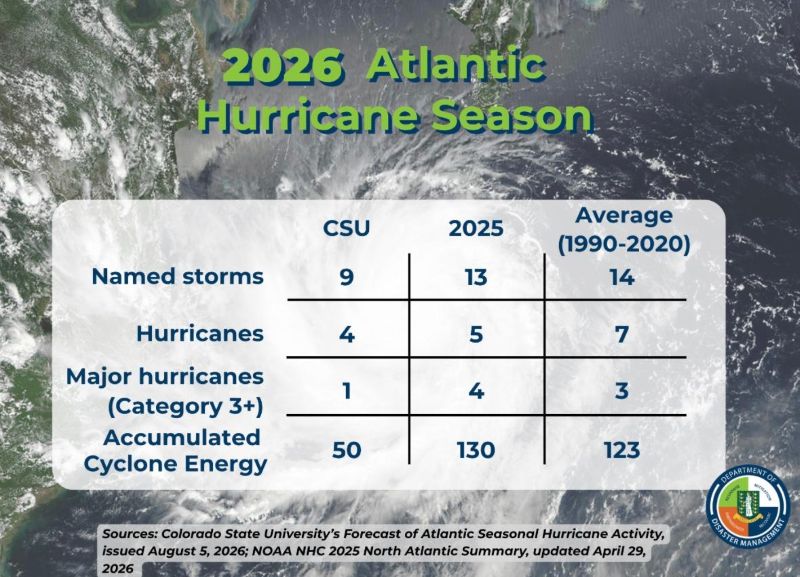
Nine named storms and four hurricanes are expected to develop this season, according to the August forecast for the 2026 Atlantic Hurricane Season from Colorado State University. Of the four Atlantic hurricanes, forecasters anticipate one will develop into a major hurricane. An average Atlantic hurricane season has 14 named storms, 7 hurricanes, and 3 major hurricanes.
Forecasters described a powerful El Nino and its very high vertical wind shear as the dominant factor driving their below average expectations for storm activity, highlighting previous similar seasons including the 2009 and 2015 seasons.
Damaging storms and hurricanes can and do develop during less active seasons, Mr. Penn said, such as Hurricane Bill from 2009 and Hurricane Danny from 2015, which both brought notable rains and wind to the Virgin Islands. He added that with so little rain experienced in recent months, local soils are dry, which means an increased risk of erosion and flooding from the next rain.
“It’s vital that none of us become complacent, because it only takes one storm system in our area to have a very serious impact,” Mr. Penn said. He added, “I appreciate the many persons in the Virgin Islands who put in the time and effort to prepare for storms and other hazards as a matter of routine.”
So far this season, two systems have been named, Tropical Storm Arthur on June 17, and Tropical Storm Bertha on July 19. Although the Atlantic Hurricane Season spans June 1 to November 30 each year, the statistical peak of the season is on September 10, and the vast majority of storms develop between mid-August and mid-October.
Residents can access the 2026 emergency shelter list, family emergency plan template, business continuity plan template, home emergency kit checklist, emergency communication passport, and sign up to become a volunteer at https://www.bviddm.com.
“Currently, no systems pose an imminent threat but the regional pattern is shifting,” Mr. Penn said, adding, “Rather than waiting for a storm to enter our forecast area, we should prepare for that possibility now.”
Mr. Penn added that for those who are especially vulnerable in emergencies, advance preparation and planning can be life-saving.
“Persons who use a mobility device; have a vision or a hearing impairment; or who have a chronic health conditions should work with their care providers, family, and neighbours to make sure they will have what they need in the event of an emergency impact,” Mr. Penn said.
Key seasonal preparations include assembling emergency supplies of food, water and medication; reviewing and updating emergency plans and insurance policies; clearing bulky waste; ensuring important documents are in order; and inspecting shutters.
Nine named storms and four hurricanes are expected to develop this season, according to the August forecast for the 2026 Atlantic Hurricane Season from Colorado State University. Of the four Atlantic hurricanes, forecasters anticipate one will develop into a major hurricane. An average Atlantic hurricane season has 14 named storms, 7 hurricanes, and 3 major hurricanes.
Forecasters described a powerful El Nino and its very high vertical wind shear as the dominant factor driving their below average expectations for storm activity, highlighting previous similar seasons including the 2009 and 2015 seasons.
Damaging storms and hurricanes can and do develop during less active seasons, Mr. Penn said, such as Hurricane Bill from 2009 and Hurricane Danny from 2015, which both brought notable rains and wind to the Virgin Islands. He added that with so little rain experienced in recent months, local soils are dry, which means an increased risk of erosion and flooding from the next rain.
“It’s vital that none of us become complacent, because it only takes one storm system in our area to have a very serious impact,” Mr. Penn said. He added, “I appreciate the many persons in the Virgin Islands who put in the time and effort to prepare for storms and other hazards as a matter of routine.”
So far this season, two systems have been named, Tropical Storm Arthur on June 17, and Tropical Storm Bertha on July 19. Although the Atlantic Hurricane Season spans June 1 to November 30 each year, the statistical peak of the season is on September 10, and the vast majority of storms develop between mid-August and mid-October.
Residents can access the 2026 emergency shelter list, family emergency plan template, business continuity plan template, home emergency kit checklist, emergency communication passport, and sign up to become a volunteer at https://www.bviddm.com.



Community
Comments
What are your thoughts on this story? Share a respectful comment with the community.
Join the conversation
Your comment will appear after review. Email is only needed if you want reply or conversation notifications.